Steak and Chips

I think we can all agree that there's no better combination than a steak cooked over fire. We all have our preferred way of cooking steak, so I won’t try to change your ways. Instead, here are some tips to consider when cooking meat over fire. 

Prep time5
Cook15
Serves2

Ingredients

  • Steak (Cut of your choice)
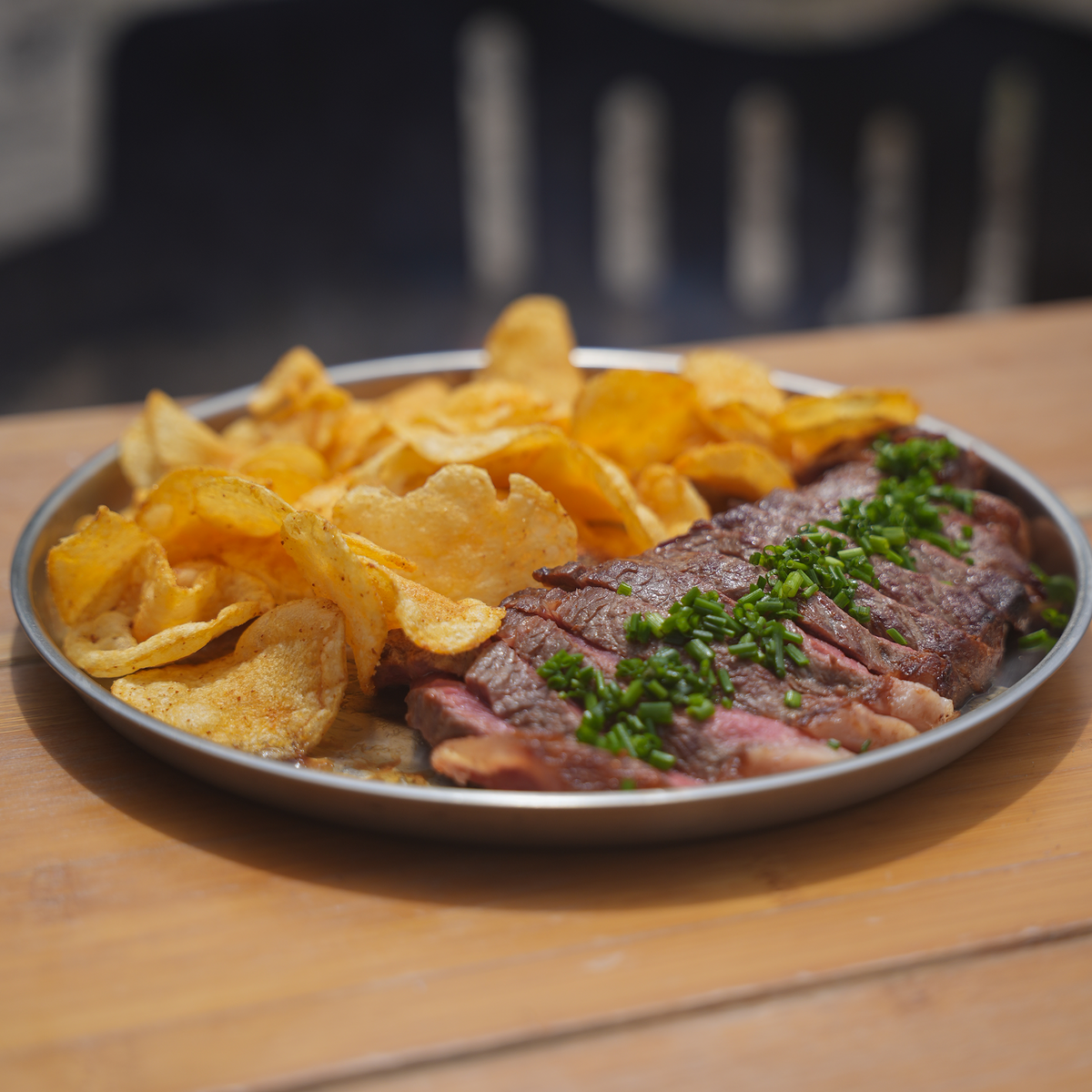
  • Chips of choice
  • Garlic
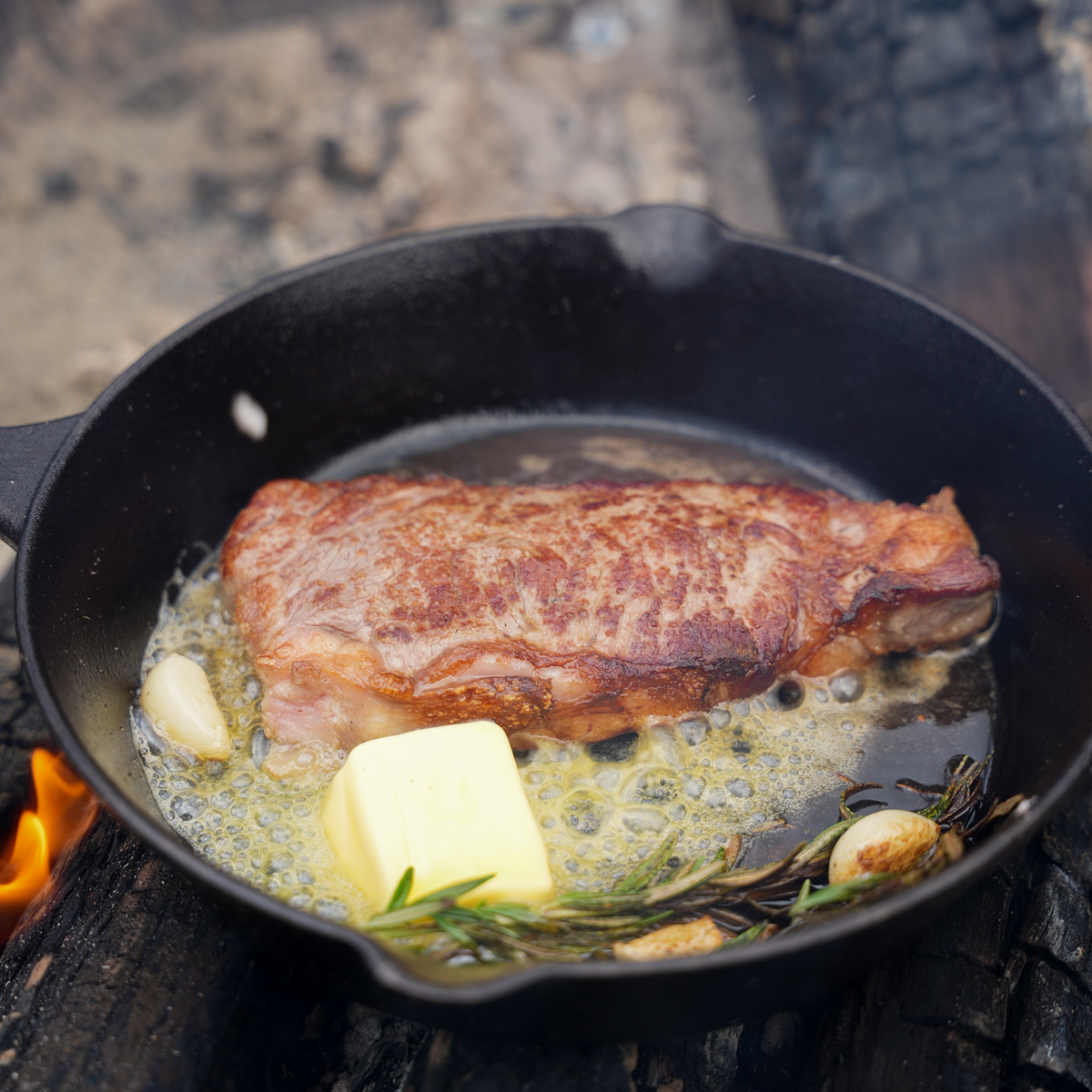
  • Butter
  • Seasoning 
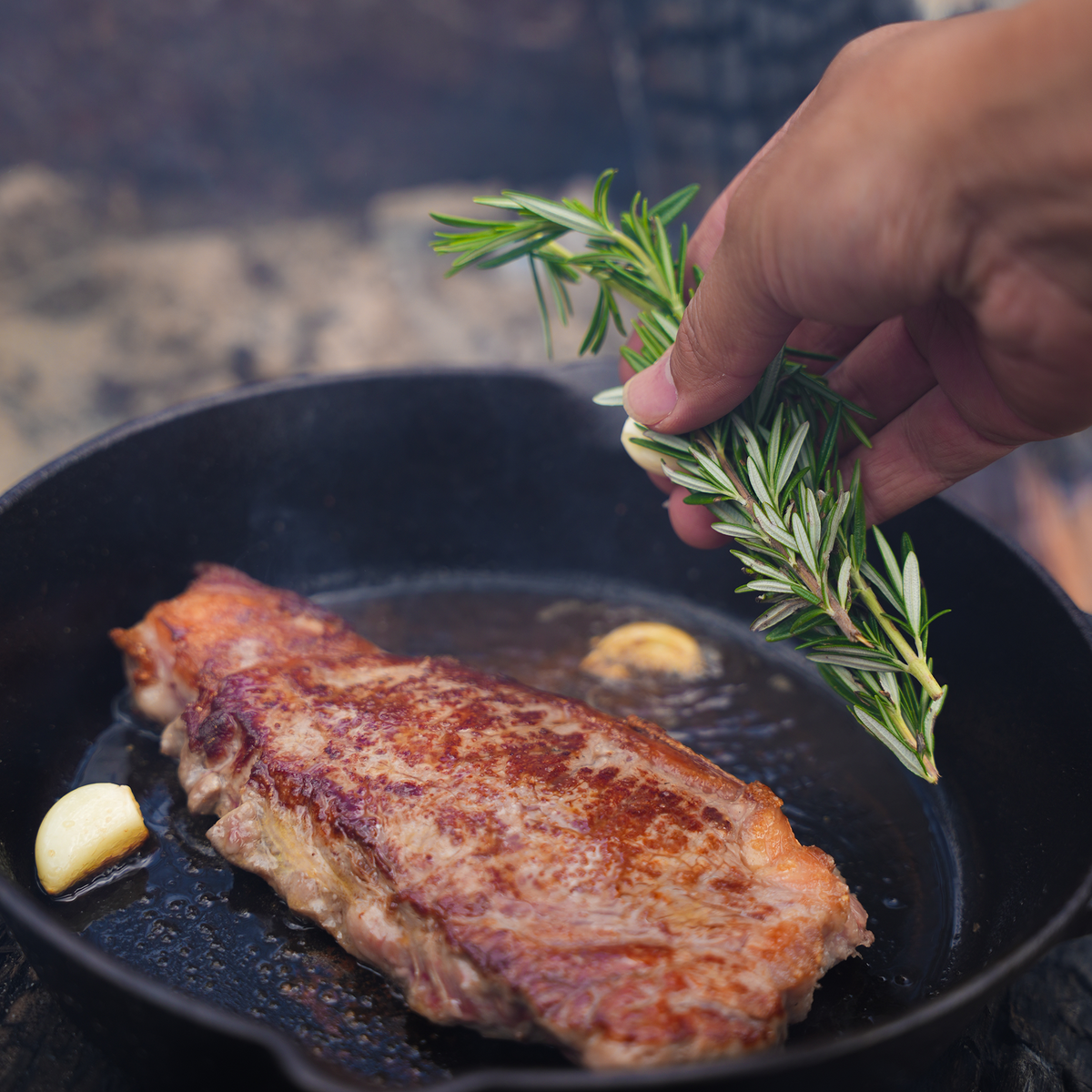
  • Rosemary (optional) 
  • Chive (optional)

Instructions

  1. Cook on Embers, Never Active Flames: 
    While it may look cool, cooking over open flames often result in black soot coating your food. Wait for your fire to burn down until you have a deep bed of glowing, white-hot coals. Radiated heat creates an even crust without the kerosene-like taste of burning wood smoke.
  2. Dig a Shallow Sand Pit for Heat & Wind Control: 
    The wind at the beach can cause the temperature of your coals and fire to vary wildly, creating challenging conditions to cook in. Dig a 15–20 cm trench in the dry sand to shelter your coals. Build your fire inside the pit, keeping the cooking area protected from the strong sea breeze.
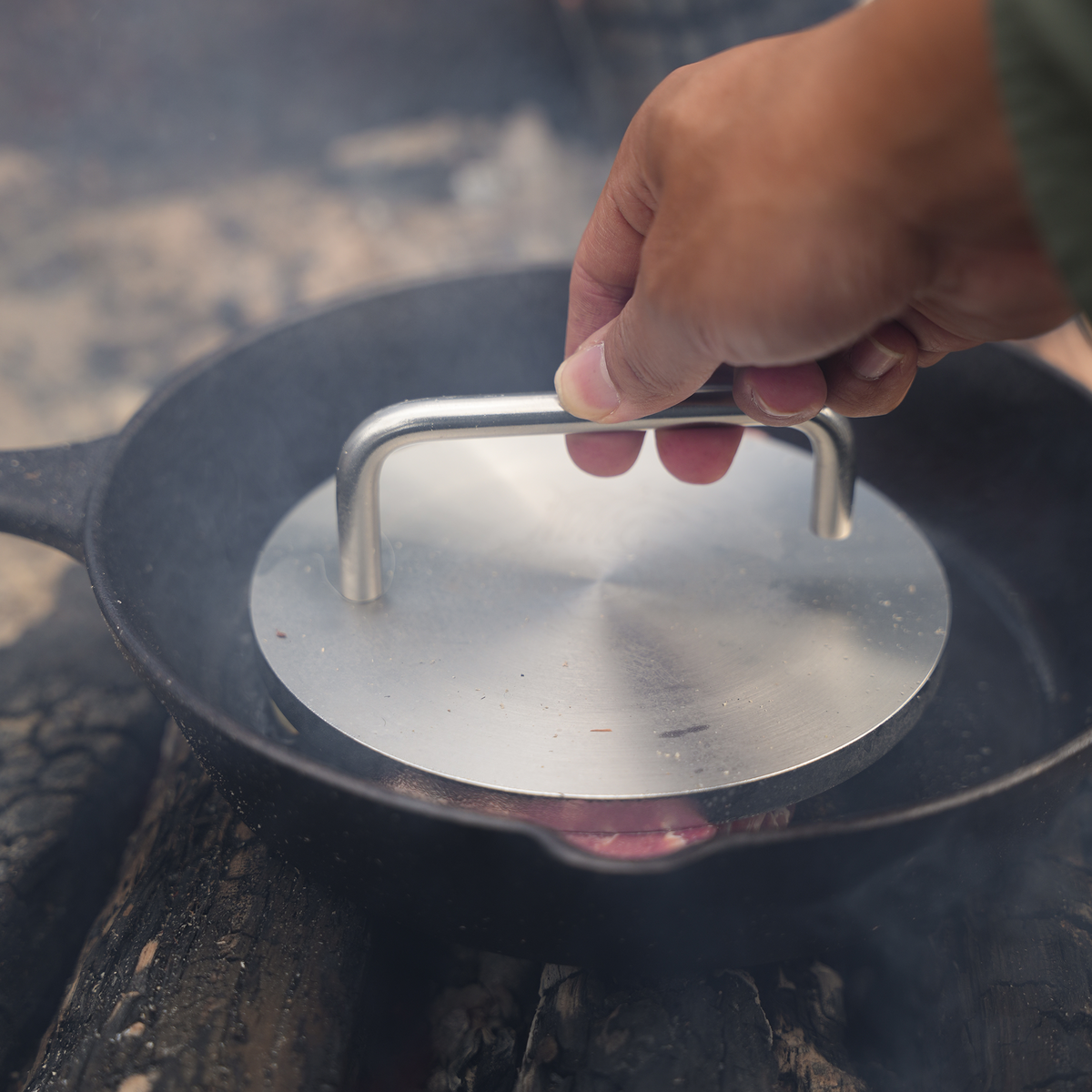
  3. Apply some pressure: 
    Applying gentle, even pressure is one of the most effective ways to get an edge-to-edge crust. When cold meat touches a hot pan, the muscle fibers tighten and the fat cap shrinks faster than the lean meat. This causes the steak to curl, cup, or buckle in the center. Any part of the meat lifted off the pan or grate gets steamed by trapped vapor rather than seared, leaving dull gray patches. Applying downward pressure forces full surface contact. 
  4. Dry Meat Yields the Best Maillard Reaction: 
    Moisture is the enemy of caramelisation. Pat every face completely dry before it touches the heat. If you salt too far ahead without drying time, salt draws out surface moisture and causes the exterior to steam rather than sear.


Explore the VAAST Collection